
Key Takeaways
- Keep interfaces simple and uncluttered for maximum usability.
- Use consistent design features across the entire experience.
- Design with accessibility from the start to serve all users.
- Optimize for responsiveness to function seamlessly on every device.
- Make navigation self-explanatory and efficient.
- Leverage visual hierarchy to guide user attention.
- Regularly test and refine the interface based on user insights.
Creating an effective user account interface is essential for boosting user engagement and ensuring that your platform is both intuitive and enjoyable to use. An interface that is thoughtfully organized not only helps users accomplish their goals but also fosters confidence and trust in your platform. For detailed inspiration, you can look at a variety of web profile design examples to see what works well in practice.
A successful user account interface clarifies complex flows, reduces friction, and empowers users to manage their information and settings effortlessly. A streamlined approach, combined with an emphasis on usability and reliability, helps build long-term relationships between users and your product.
Simplify and Clarify
Clutter can overwhelm users and cause them to abandon tasks prematurely. Strive for a clean, simple interface by eliminating distractions and spotlighting only the most essential actions. For example, prioritize a single, prominent call to action rather than multiple competing ones. This strategy reduces the mental burden on users and helps them focus on completing their desired tasks smoothly.
Maintain Consistent Patterns
Consistency in design elements creates a sense of familiarity, streamlining the user experience and building trust. Use consistent colors, buttons, fonts, and iconography across your user account interface, aligning with the broader visual standards of your platform. Predictable design patterns enable users to develop accurate expectations, turning learning into second nature over time.
Design for Accessibility
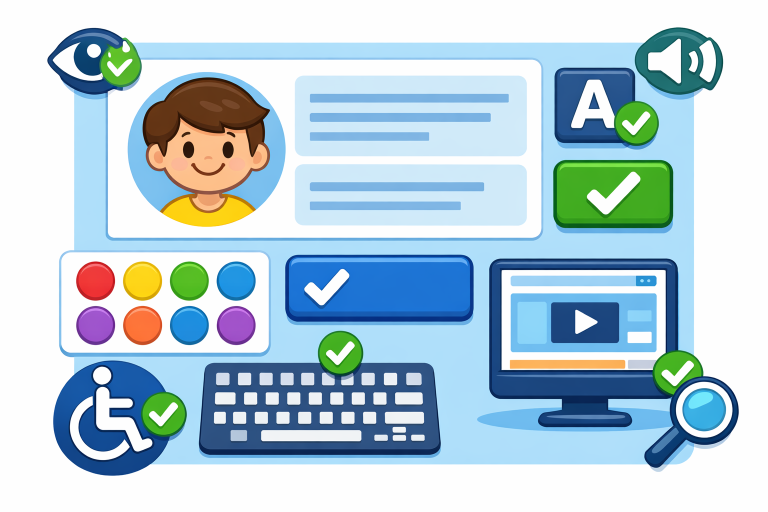
Inclusivity in design is vital for reaching the broadest audience. By referencing the Web Content Accessibility Guidelines (WCAG), you can ensure your interface is usable by people with disabilities, including those who use screen readers or navigate with keyboards. Prioritize high-contrast text, logical heading structures, and clear labels for inputs and controls to streamline the experience for every user.
Implement Responsive and Adaptive Design
Today’s users interact with websites on a range of devices, from smartphones to large monitors. Responsive and adaptive layout principles ensure your account interface presents itself appropriately on any screen. Images should scale, grids should be fluid, and interactive components should be comfortably touch-friendly and clickable across device sizes.
Prioritize Intuitive Navigation
Navigation should act as an invisible guide, helping users find their way without confusion. Structure menus and submenus logically, group related actions together, and use descriptive labels. Users should never be uncertain about how to return to the dashboard, edit settings, or log out. Breadth and clarity reduce frustration and streamline workflow completion, key for modern platforms that emphasize productivity and satisfaction.
Use Visual Hierarchy
Visual hierarchy employs principles like size, color, whitespace, and placement to direct user attention to the most critical elements. Important actions, such as the “Save Changes” button, should stand out from secondary options. Headings and subheadings should clearly delineate sections, allowing users to scan and find key account options at a glance. An engaging, organized hierarchy keeps the interface approachable and reduces the time needed to perform tasks.
Test and Iterate
The most effective user account interfaces are refined continually through real-world user feedback. Conduct routine usability tests by presenting users with key scenarios, such as updating their password or locating billing information. Analyze user behavior, identify common points of hesitation or confusion, and refine underperforming elements. Iterative improvements, grounded in data and observation, will ensure your interface evolves alongside user expectations and technological trends.
Beyond the Basics: Additional Considerations
While the essentials provide a reliable foundation, there are additional strategies to enhance your user account interface further. Consider the incorporation of personalization features. Allow users to customize their profiles by uploading avatars, toggling between light and dark mode, or selecting notification preferences. These elements help users feel more in control and more connected to your platform, which translates into greater engagement.
Transparency is equally crucial in account management. Users should always be able to view their activity history, such as login records, changes to account details, and billing transactions, within their profile. This kind of openness fosters trust and helps users quickly identify any suspicious activity. Supplementing the interface with contextual help, such as tooltips, inline explanations, or a prominent help center link, empowers users to resolve issues or learn about unfamiliar features independently, reducing their reliance on customer support.
Another advanced technique is integrating security best practices directly into the interface. Prompts encouraging strong password creation, multi-factor authentication, and periodic security checks reinforce both safety and peace of mind. If users can manage and review their connected devices and active sessions, they are less susceptible to breaches and more likely to feel secure while engaging with your product.
Measuring Success
Tracking how users interact with account features provides valuable insights. Use analytics to monitor common pathways, frequently used features, and areas where users hesitate. Heatmaps or session recordings can reveal friction points that might not emerge in testing alone. Pair quantitative data with qualitative research, such as surveys or user interviews, to gain a holistic understanding of user needs and pain points. Setting KPIs, like reduced time to complete a task or increased user satisfaction scores, ensures that improvements are both measurable and meaningful.
Cross-functional collaboration is essential. Designers, developers, product managers, and customer support teams should work together to prioritize new features and address reported issues. Agile workflows enable teams to test new ideas quickly and roll out enhancements with minimal disruption. Continuous learning, feedback, and incremental updates keep the account interface modern and competitive.
Conclusion
Building a strong user account interface takes a holistic approach that values simplicity, cohesion, accessibility, responsiveness, intuitive navigation, and ongoing iteration. By applying these best practices, you not only make your digital platform easier to use but also lay the foundation for stronger user loyalty and satisfaction over time. For more insights on enhancing digital experiences, visit the Nielsen Norman Group’s interface design guidelines.