Key Takeaways
- Low-maintenance landscaping strategies relieve the burden of traditional lawn care.
- Tech solutions like robotic mowers and smart irrigation systems save time and water.
- Switching to eco-friendly ground covers, like clover lawns, improves sustainability.
- Native plants and xeriscaping offer regionally adapted, resilient alternatives.
In today’s fast-paced world, keeping a pristine lawn shouldn’t consume all your free time. Thanks to recent innovations and nature-inspired solutions, there are now many ways to reduce yard work while maintaining exceptional curb appeal. Whether you’re seeking high-tech solutions or eco-friendly alternatives, exploring Charlotte artificial grass products and other advancements offers new paths to a gorgeous, low-maintenance yard.
From upgrading to smart automation to choosing better-suited plants and ground covers, transforming your lawn has never been more accessible. Integrating creative landscaping with practical technology not only saves time but also nurtures a healthier outdoor space for your family. By making thoughtful decisions, homeowners can create sustainable, beautiful lawns with minimal ongoing effort.
As you rethink landscaping routines, consider how innovative materials and smarter systems can replace the old cycle of endless mowing, fertilizing, and watering. For those looking to go a step further, exploring different types of artificial grass can significantly reduce the work required to maintain an immaculate yard.
Embrace Low-Maintenance Landscaping
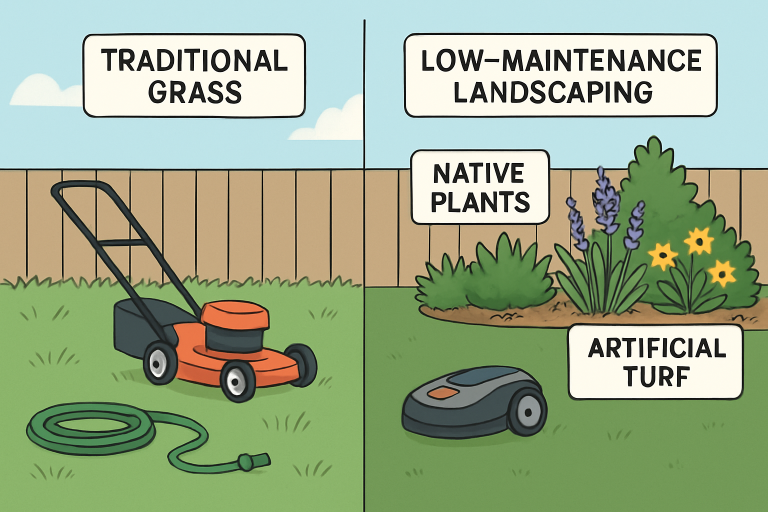
Instead of devoting your weekends to grass mowing or edging, redesign your yard with less work in mind. Replace underutilized turf with native shrubs, eco-friendly mulches, artificial grass, or garden beds filled with drought-resistant plants. Not only will native and regionally adapted species require less water and attention, but they’ll also support pollinators and local birds, enhancing your backyard’s natural beauty and health. According to the EPA, shifting traditional turf to native plantings can lead to substantial reductions in watering, fertilizing, and mowing.
Invest in Robotic Lawn Mowers
Robotic mowers have transformed lawn care, providing a set-it-and-forget-it solution for homeowners. With cutting-edge navigation systems and self-charging stations, these machines keep your grass at an optimal height without the back-and-forth of manual mowing. Models from leading tech brands can even adapt to uneven yard layouts, keeping your lawn tidy—and your weekends free.
Opt for Clover Lawns
Clover is gaining popularity as an alternative to traditional grass due to its resilience and sustainability. White Dutch clover, in particular, grows quickly, remains green even in dry periods, and outcompetes weeds without the need for chemical herbicides. Its deep root system reduces watering needs, while its nitrogen-fixing properties enhance soil fertility naturally, further reducing fertilizer requirements. Plus, clover flowers attract bees and other pollinators to your garden, helping create a healthier environment.
Implement Water Conservation Techniques
Modern irrigation solutions, such as drip irrigation and weather-conscious smart controllers, allow you to optimize when and how much you water. Smart sensors consider rainfall, soil moisture, and upcoming weather, reducing resource waste and preventing overwatering. Efficient irrigation directly benefits not just your wallet but also the health of your landscape, ensuring deep-rooted, lush plant growth that’s resilient against drought.
Utilize Native Plants
Native plants are naturally acclimated to your area’s soil, pests, and weather conditions. As a result, gardens designed with these species are less likely to suffer from disease or require excessive watering and pesticides. Beyond saving effort, native plants create habitat for local insects and animals, supporting a miniature ecosystem in your yard. The initial design transition may require research into which plants work best for your region, but the maintenance rewards are longstanding and significant.
Adopt Xeriscaping Principles
Xeriscaping, the art of designing landscapes to minimize or eliminate irrigation needs, pairs perfectly with low-maintenance goals. By using gravel paths, mulched garden beds, and drought-resistant foliage, you can reduce water use and the weekly maintenance cycle. Strategic use of these principles makes your yard visually dynamic and eco-conscious, especially in regions prone to water shortages or drought.
Leverage Smart Technology
Advancements in lawn care technology—like soil sensors, Wi-Fi-enabled sprinklers, and automated garden lighting—make routine maintenance practically effortless. These tools work together to ensure your lawn receives the necessary care at precisely the right times, without waste or guesswork. Investing in the latest smart devices can further streamline outdoor chores and boost the overall health and appeal of your landscape.
Consider Artificial Turf
Artificial turf is one of the most effective ways to achieve a picture-perfect lawn year-round with almost no maintenance. High-quality synthetic products now closely mimic the look and feel of real grass, offering a durable solution that never needs mowing, fertilizing, or watering. For families with kids or pets, engineered turf stays green and mud-free year-round, standing up to heavy play without damage or bare patches.
By incorporating modern methodologies, whether it’s through water-saving irrigation, advanced mowing technology, eco-friendly plants, or beautiful artificial alternatives, you can drastically reduce your lawn maintenance workload. Choose the solutions that best fit your needs and enjoy a stunning, sustainable yard that complements your lifestyle.