
Key Takeaways
- Phishing tactics are increasingly subtle, leveraging targeted and personalized messages that are difficult to distinguish from legitimate communication.
- Multi-factor authentication (MFA) should be standard practice across all key accounts and systems, providing an essential layer of security.
- Regular system and software updates help shield against exploits of known weaknesses, which attackers commonly target shortly after they are discovered.
- Ongoing education, practice, and simulation keep employees and individuals alert to new and emerging threats, significantly reducing the success rate of phishing attempts.
- Advanced email security filters that leverage AI help catch potential threats before they ever reach users’ inboxes, serving as a foundational defensive line.
Phishing attacks are evolving at an unprecedented pace, blending clever impersonation tactics and advanced psychological manipulation techniques that successfully deceive even the most security-conscious individuals and organizations. No longer limited to generic, easily identified scams, today’s phishing threats are highly customized and leverage stolen data, social media footprints, and recent events to bolster their credibility. The increasing sophistication of these scams demands more than just a passing awareness—it requires adopting a layered defense strategy and making cybersecurity vigilance a daily discipline. Cultivating this mindset creates a more substantial barrier against ever-changing attack vectors. One highly effective way to reinforce awareness is to integrate a phishing simulator into regular IT education, helping both individuals and teams regularly recognize, respond to, and recover from phishing attempts that mimic real-world attacks. With cybercriminals continuously refining their methods—using tools ranging from AI-based grammar fixes to spoofed domains—understanding how to spot phishing threats and address internal vulnerabilities systematically is absolutely critical. Failing to keep up with evolving risks may result in severe consequences, including data breaches, financial losses, and reputational damage. This article explores proactive strategies—ranging from implementing proven technical safeguards to fostering a pervasive culture of cybersecurity—so both individuals and organizations can stay several steps ahead of would-be attackers. Strengthening your digital defenses is not an optional benefit—it’s a requirement for survival and trust in today’s interconnected environment, where a single mistake can have devastating consequences for sensitive information and business continuity.
Recognizing Phishing Attempts
Phishing schemes are sophisticated social engineering tools that prey on people’s trust by mimicking legitimate entities such as banks, government agencies, and well-known tech providers. Attackers meticulously craft emails or websites to replicate the visual identity, language, and tone of trusted organizations, sometimes even referencing recent events or transactions to enhance the sense of urgency. Typical scenarios include fake password reset requests, security alerts about breached accounts, or questionable invoices demanding immediate action. These messages are intentionally designed to create pressure and elicit quick responses, often before victims have time to question their validity. Recognizing minor inconsistencies in URLs, misspelled domain names, or suspicious attachments remains essential, and organizations like the Cybersecurity and Infrastructure Security Agency provide detailed resources for spotting and reporting such threats. Cultivating a healthy skepticism toward unsolicited communications, even if they seem urgent or familiar, is a critical step in staying safe online.
Regularly updating your passwords and enabling multi-factor authentication adds another layer of protection against phishing attempts. Staying informed about the latest scam trends ensures you can recognize even the most sophisticated attacks before they compromise your personal or organizational data.
Implementing Multi-Factor Authentication (MFA)
MFA is a critically important security feature that significantly impedes attackers, even if they manage to obtain your primary credentials. With MFA, users must verify their identity through an additional independent channel—commonly a smartphone, text message, or authentication app—before gaining account access. This extra layer drastically reduces the likelihood of unauthorized breaches since an attacker would need access to both the password and a secondary authentication device. Implementing MFA across all essential systems, especially those containing sensitive or financial information, is one of the most straightforward and effective defenses available. Organizations should mandate MFA for critical accounts and routinely review settings to ensure that new applications or users are not left unprotected.
Regular Software Updates
Outdated software containing unpatched vulnerabilities is a primary target in most successful attacks. Cybercriminals closely monitor disclosures of security flaws and rapidly develop exploits for these weaknesses, especially in popular operating systems, browsers, and plugins. That’s why IT teams and individuals must prioritize updating systems, browsers, applications, and plugins immediately after new security patches are released. Automating updates or setting strict reminders can dramatically reduce the exposure window, minimizing the period during which vulnerabilities can be exploited. Besides desktop computers and servers, organizations should include firmware, routers, wireless access points, and other IoT devices—which are often overlooked but equally vulnerable—in their update protocols. Ignoring these endpoints can create backdoors for attackers, so a comprehensive patch management process is key to minimizing risk across the organization.
Employee Training and Awareness
Phishing attacks often succeed due to human error, with many breaches beginning with a single unsuspecting click. Therefore, security awareness training must go beyond static presentations. Regular, scenario-based education—including the use of an interactive phishing simulator—helps boost recognition of new deceptive tactics and reinforces a cautious digital routine. Simulated phishing exercises, combined with real-time feedback, allow employees to safely practice identifying suspicious emails and messages, building both confidence and practical skills. Over time, continuous education reduces the rate of errors that compromise. Comprehensive training should also cover current phishing trends, warning signs to watch for, and steps to follow if a suspicious message is received.
Utilizing Advanced Email Filtering
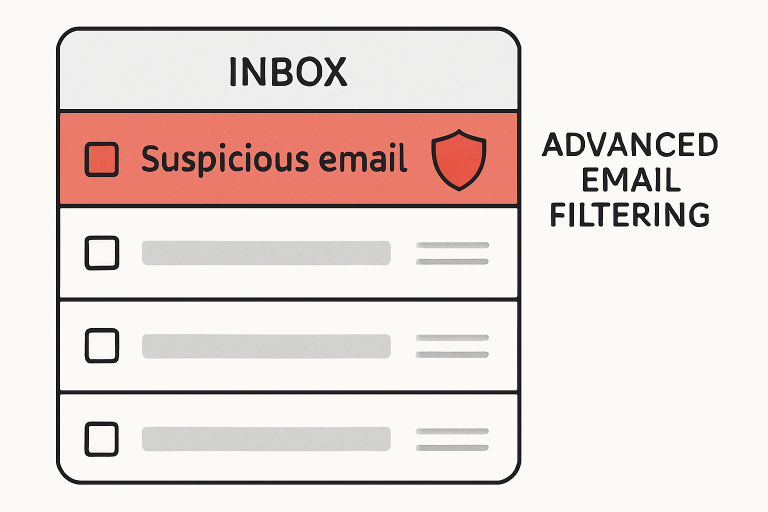
Email is still the most common attack vector for phishing. Modern email filtering solutions equipped with artificial intelligence and real-time threat intelligence can now detect subtle indicators of phishing. These systems analyze a wide range of data points—including sender reputation, unusual header information, attachment contents, and embedded malicious links—to accurately flag, quarantine, or block suspicious messages before they reach users’ inboxes. Such filtering works best when integrated with endpoint detection and response (EDR) and security information and event management (SIEM) systems, which can provide centralized oversight and facilitate rapid containment of any detected threats. For organizations handling sensitive information or frequently targeted by attackers, investing in robust filtering tools is an essential part of their security framework and ensures a strong frontline defense.
Verifying Communications
Requests for credentials, funds transfers, or confidential data should never be trusted solely on the basis of the contents of an email, text message, or other digital communication, no matter how convincing they appear. Attackers often use urgent or personalized messages to create a false sense of authority or a sense of crisis, hoping to bypass standard security controls. To mitigate this risk, employees and individuals should be trained to independently verify urgent or sensitive requests using trusted channels, such as calling the purported sender at a published company number or meeting in person. Formal policies around verification are especially vital for staff in finance, HR, or IT roles who frequently handle sensitive transactions and data. Establishing these policies—and reinforcing them through ongoing reminders—dramatically reduces the risk of falling victim to spear-phishing or business email compromise attacks, which are often tailored to exploit authority and trust within organizations.
Reporting Suspicious Activities
A resilient security culture depends on timely and open reporting of suspicious activities. Employees and users should feel empowered—and expected—to report odd or suspicious emails without fear of punishment or ridicule. Organizations should make the reporting process as simple as possible, offering dedicated inboxes, hotlines, or automated forms to collect suspicious messages or incidents. Quick reporting enables IT and security teams to investigate, contain threats, and issue organization-wide alerts if necessary, drastically reducing the risk of widespread compromise. Encouraging this proactive approach not only helps stop attacks early but also improves the group’s ability to learn from real incidents and respond more effectively over time. Organizational policies and leadership play an important role in this process, signaling that reporting issues is a valued and essential part of everyone’s responsibilities.
Conclusion
Contemporary phishing attacks are cunning, adaptive, and relentless, capitalizing on both technical flaws and lapses in human judgment. Combating these threats requires a multi-layered approach that combines strong technical measures with ongoing training and the cultivation of a vigilant, security-conscious mindset at every level. By investing in transformative solutions such as multi-factor authentication, frequent software and firmware updates, and regular practice with a phishing simulator, organizations and individuals take significant, practical steps toward reducing their risk of successful attacks. In a world where cybercriminals are constantly innovating, consistent vigilance and a proactive stance remain the most effective defenses against the evolving, persistent landscape of online threats.